The Forgiveness I Never Asked For
Budh Ram squatted on his haunches in front of my father, preparing to leave for his village, as he did every year. My mother had packed clothes, spices, and small things for him to carry home. His face was deeply lined, weathered by time and sun. He always seemed very old to me—though perhaps he wasn’t. To my child’s eyes, he simply was.
There was a quiet, mutual respect between him and my father. He tended our farm—the fruit trees, the vegetables—and sold the extra for a little money.
Before leaving, he lifted his hands to his ears and said, “Kaha suna maf.”
After he left, my father asked, “Do you know what he said?”
I shook my head.
“He’s asking for forgiveness,” my father explained. “For anything he may have heard or said unknowingly that could have caused harm.”
“Why does he say that?” I asked.
“It’s what one does before leaving for the village,” he said. “In case he never returns.”
I listened, but I didn’t really understand. Not then. Not fully. Not until many years later.
The Apology We Never Offer
When do we ask forgiveness for things we didn’t mean to say?
For assumptions we didn’t realize we were making?
For hurts we caused without ever knowing we had caused them?
Life feels difficult enough with the things we do know. Why burden ourselves with the unknown?
And yet, one day, it came to me—how I might have unintentionally hurt someone long ago. Someone who was no longer alive. Someone too gentle to ever correct me. An elder who loved me. By then, it was too late to apologize, too late to make amends. The moment had passed.
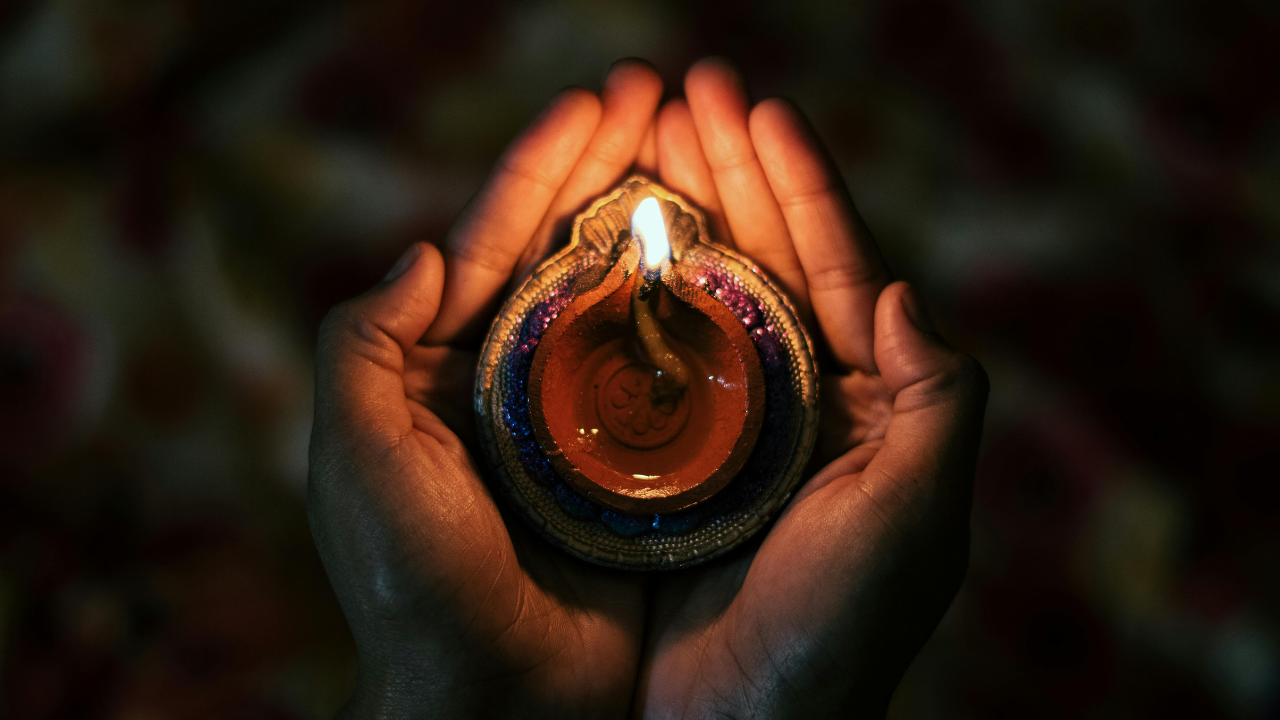
So I lit a candle. And I asked for forgiveness—for my youthful stubbornness, for a mind full of opinions and not nearly enough understanding.
I thought of Budh Ram’s words: kaha suna maf—forgiveness for the unintentional. For assumptions made. For meanings attached. For stories misunderstood.
Learning to move gently through this world is no small task.
When Holding on Gets Heavy
More recently, a client came to me wanting to improve her friendships. She felt distant, unable to truly connect, though she cared deeply for the friends in her life. I suggested a simple practice. She lit a candle and, one by one, asked for forgiveness in her heart—from each friend.
For resentments held quietly.
For slights never spoken.
For the anger that arose when others succeeded.
For moments of feeling overlooked and unseen.
For time never made for others.
For offering advice when listening was needed.
The list was long. So were the friendships.
When she finished, she felt lighter. Something had softened. And slowly—almost imperceptibly—ease returned to her relationships. Resentment gave way to compassion, and compassion made room for mudita.
Letting Joy In
Mudita is the Sanskrit word for joy in another’s happiness. Not comparison. Not self-erasure. Simply the ability to let someone else’s good fortune warm us rather than threaten us.
In Indian thought, mudita is sometimes described as a gift of the heart cultivated over lifetimes of inner work. Perhaps because it runs counter to our instincts. We are quick to measure ourselves against others, to feel diminished by their success, to keep quiet accounts of who has more or less. Resentment can feel safer than shared joy.
But mudita is not a personality trait; it is a practice. It begins by noticing where the heart tightens—and choosing, gently, to soften. It asks us to loosen the stories that say there isn’t enough, that another’s happiness takes something away from us. It invites kindness toward others, and in that, toward ourselves.
In this way, mudita becomes another form of kaha suna maf—forgiving not only what was said or heard unknowingly, but also what we carried silently within ourselves.
And when that forgiveness takes root, something shifts. We move through the world more lightly. The edges soften. Relationships breathe again.
Sometimes, in making space for another’s joy, we find that our own has been quietly waiting there all along.
A Tiny Invitation
If this resonates, you might try a small practice this week. Light a candle. Bring one person to mind. And silently offer kaha suna maf—for what was said, unsaid, misunderstood, or never named.
You don’t need to reach out. You don’t need to fix anything. Just notice what softens.