What If You Reached Out Anyway?
Recently, at a dinner, the conversation took an unexpected turn: What makes a good friend?
The answers varied. Someone who calls often, checks in, and remembers your birthday. Someone you may not speak to for months yet pick up with as though no time has passed. Someone who shows up when life gets difficult, without keeping score of favors or gifts.
Someone you can be vulnerable with, gossip with, or simply feel warm around, like slipping into fuzzy socks on a cold winter day.
One person said all his friends were from childhood. Others reminisced about the particular magic of knowing someone before life became complicated.
Listening, I found myself wondering, what would be on my list? And what kind of friend am I?
Which of these ideas resonates with you? Have you ever stopped to consider what kind of friend you are and what being a good friend means to you?
Friendship Without a Checklist
Friendship becomes difficult when it comes with too many expectations. Measured against some of the qualities around that dinner table, I would undoubtedly fall short.
I think of relationships as living things, free to change, evolve, and find new ways to connect. We grow, our circumstances shift, and different parts of us emerge. Why shouldn't our relationships grow alongside us?
Some do deepen, while others drift. Sometimes, we discover a side of someone that leaves us unsettled or disappointed. Trust gives way to dissonance, and gradually, the relationship withers.
Perhaps friendship is as much about accepting change as it is about showing up.
The Courage to Risk Rejection
In January, a dear friend lost her battle with cancer. Her parents divorced when she was one. From the age of four, she navigated flights as an unaccompanied minor, eventually finding her way to boarding school and beyond. She learned early how to enter unfamiliar places and make her way in the world.
At her memorial service, friends from different chapters of her life spoke about her. One pattern emerged: she was almost always the one who reached out first.
There was the boy at the bus stop on her first day at boarding school, the girl she invited to be her college roommate, and the woman at her synagogue whom she approached to learn Hebrew.
Each had hesitated when she first approached them. Years later, they stood at her service struggling to hold back tears as they remembered her warmth, her kindness, her adventurous spirit, and humor.
She had made the first move. They had made room for her. And friendships had grown.
Eight Weeks
My friend invited me to visit her in the city where she lived. I'm so glad I went.
We spent time together, picking up the threads of a thirty-year friendship. We shared stories, caught up on what had changed, and delighted in what hadn't. The years between us seemed to fold away.
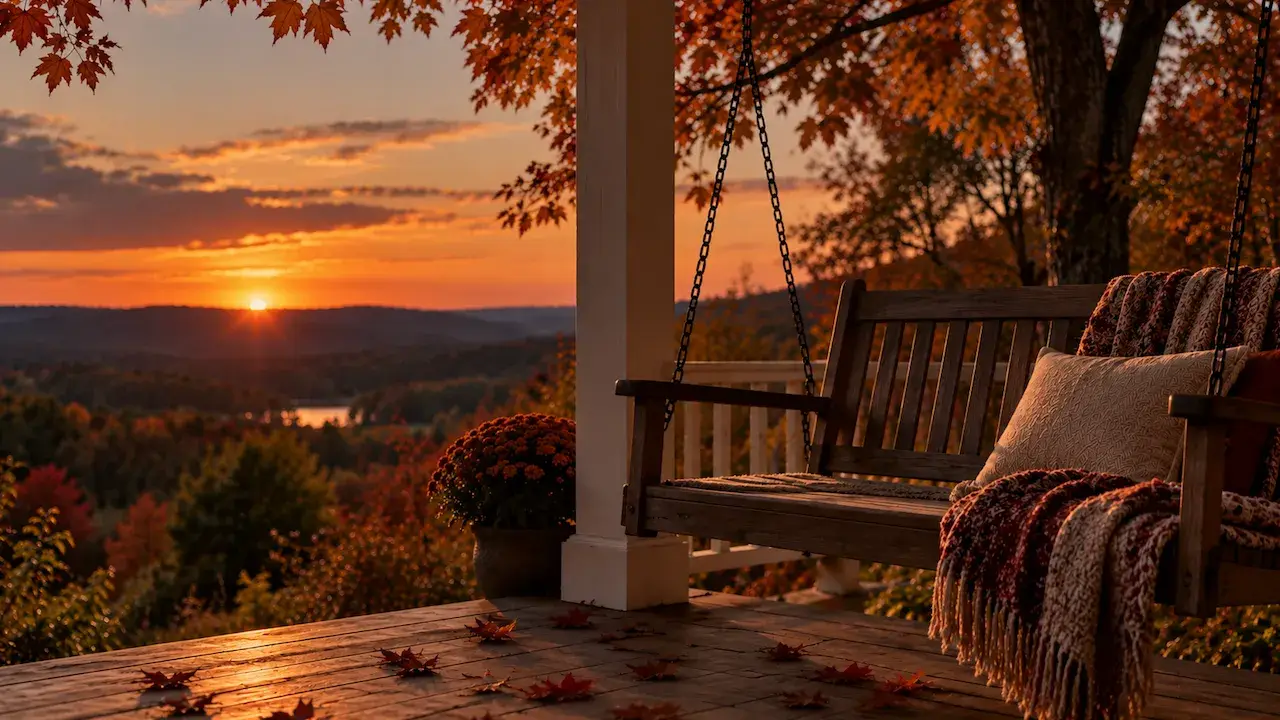
I took a photograph of her on her porch swing, her favorite place to watch the world go by. She looked serene and beautiful, hopeful about the next round of treatment.
Eight weeks later, she was gone.
I didn't know, when I accepted her invitation, that our time together would become one of my most treasured memories. Had I not gone, I know I would have regretted it.
This doesn't mean we should accept every invitation or make ourselves available to everyone. Our time and energy are finite. Some relationships no longer nourish us. Some invitations carry obligations we cannot or do not wish to meet. Saying no matters, too.
But sometimes an invitation deserves a second look. Can I open myself up too? Might I regret letting this opportunity pass? Could I reach out, too?
I'm grateful my friend reached out and that I said yes. I didn't know how little time we had left. I only knew she mattered to me, and I wanted to see her.
The Fear That Keeps Us Apart
At her funeral, I understood something about friendship more deeply. Reaching out takes courage. It means risking an awkward moment, an unanswered invitation, or rejection.
My friend did this throughout her life. She could never have known how deeply those small gestures would matter, or how many lives she would touch simply by making the first move.
As I called an Uber to the airport after her service, I noticed that the last four digits of the car's number matched my birthday—month and day.
My sadness mingled with an unexpected inner smile. It felt like a small, tender reminder of the day I'd just lived through and the lesson I was carrying home.
Perhaps being a good friend isn't about meeting every expectation or keeping a perfect record of calls, birthdays, and favors. We cannot control which relationships endure or how they change. We cannot be everything to everyone.
But we can choose to open our hearts and be willing to risk rejection! Sometimes, a small gesture becomes a lifelong friendship.
Sometimes, saying yes gives us a memory we'll always be grateful for.
What would you do today if you were willing to risk rejection?
With love,
Anu
P.S. If this reflection has you thinking about the relationships in your own life, the patterns that shape how you connect with others, and the choices you make about what to hold onto or let go, my book, Heal Your Ancestral Roots: Release the Family Patterns that Hold You Back, offers a deeper exploration of how our histories can influence the way we move through our lives and relationships.
And if you’d prefer a more guided experience, you can explore my Flourish course, where I take you through this work step by step.
Explore the book here.
Learn more about Flourish here.