The Walk That Moved Us
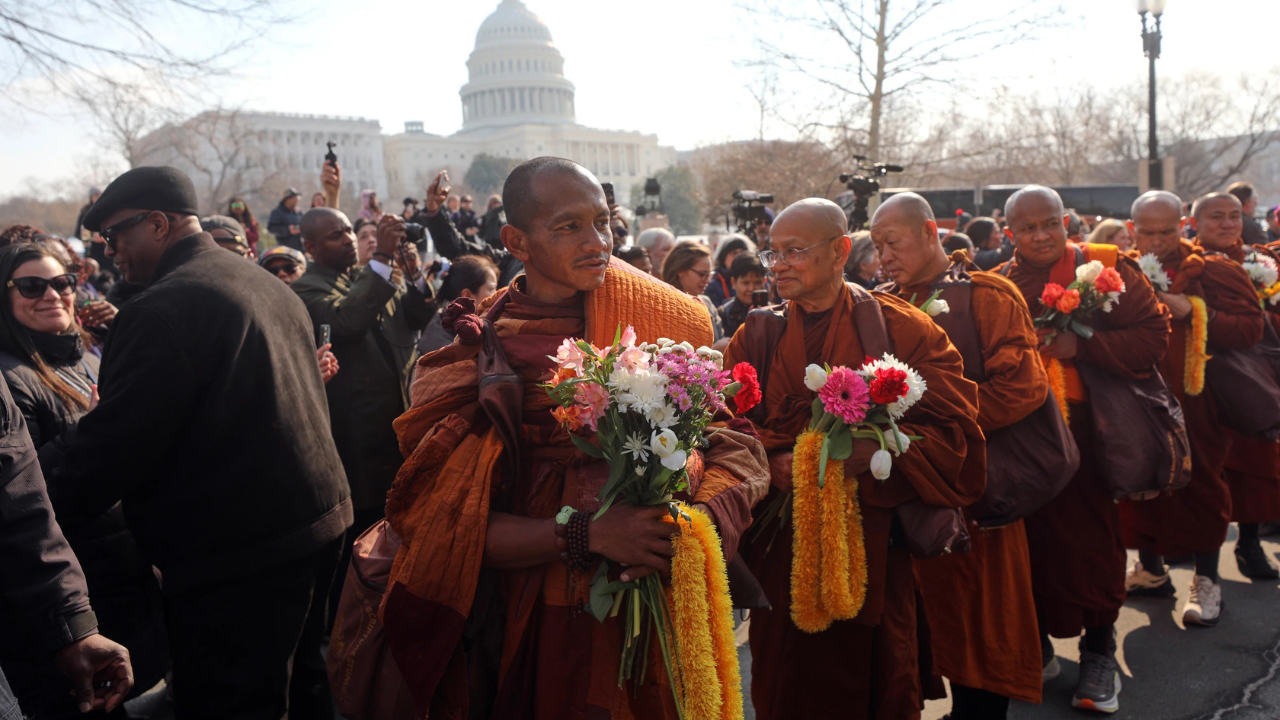
Maybe you too watched the monks walking.
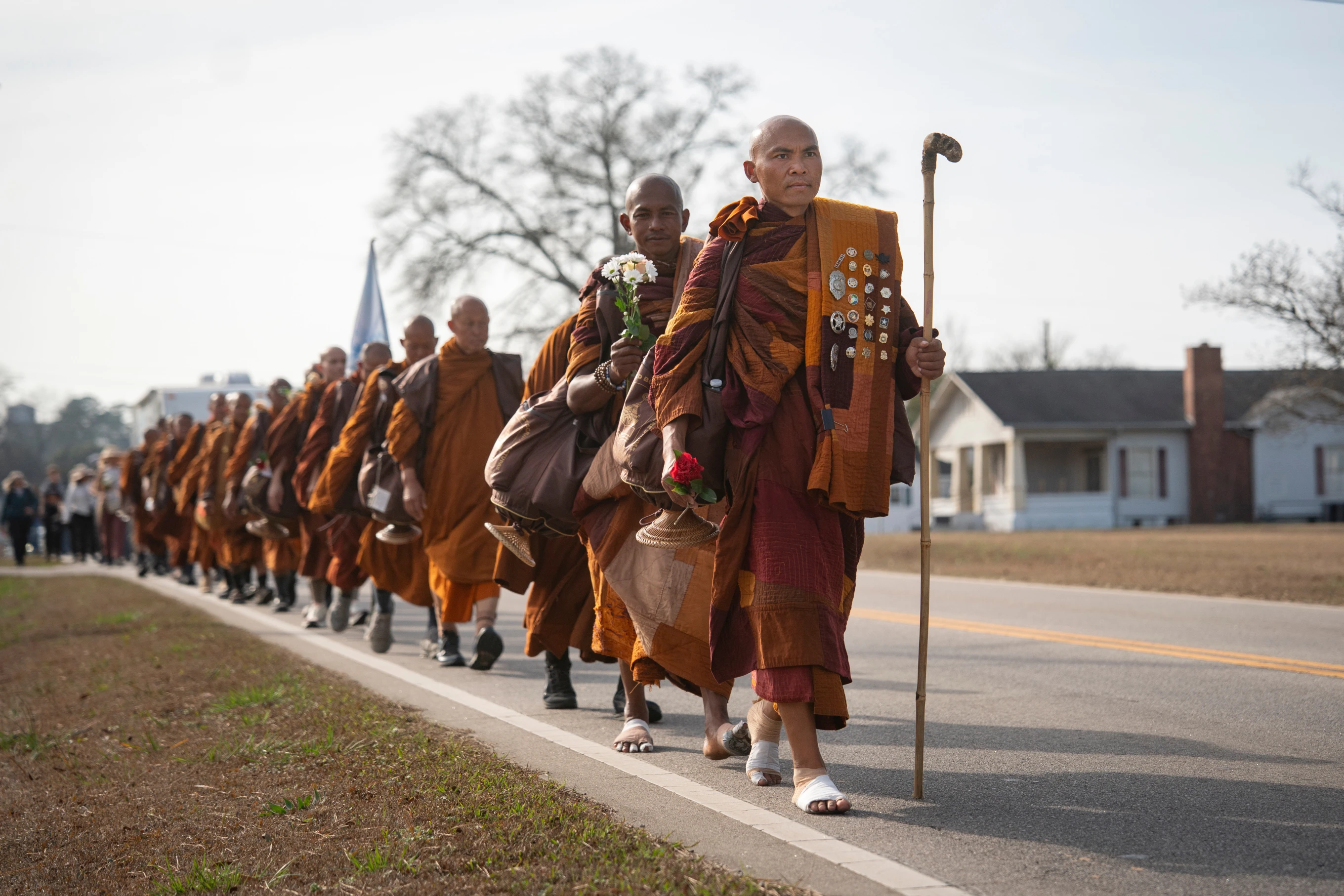
They walked 2,300 miles for nearly a hundred and ten days. Some were barefoot. One slept upright like he had for the previous thirteen years. They ate one meal a day before noon, relying entirely on the kindness of strangers, not knowing where the next would come from.
What began as a quiet, single-file pilgrimage slowly morphed into something extraordinary. Thousands followed online. Thousands more walked with them in the towns they passed or waited to see them in the winter sun, relentless rain, and freezing cold. Despite all the attention, the monks continued walking silently, receiving and offering flowers and blessings.
And many of us cried watching them.
I did too. And I couldn’t immediately explain why.
The head monk spoke about mindfulness, breathing, inner peace—nothing we haven’t heard before. No new philosophy. No breakthrough revelation. So why did something so simple move so many of us to tears?
I don’t know if there’s one answer. But their silent walk for peace stirred something old and deep within me.
A Lesson in Silence
Many, many years ago, I had stormed into my teacher’s room, furious about my life and ready to be heard. He too was an orange robed Indian monk. Instead of listening, he sent me to his disciple’s room. The disciple was meditating. He never opened his eyes. I sat there, indignant at first, waiting to be acknowledged. Slowly, without a word spoken, his presence calmed me. My anger shifted and my breathing slowed. My body settled down.
No advice, validation, or response. But within me, something regulated itself in the quiet.
I’ve learned much since then. But living intentionally and mindfully, steady and present in the midst of life’s hardships and challenges isn’t easy.
What We Were Taught About Emotion
We are often taught to suppress our emotions early on.
Don’t cry! You’re overreacting as usual!
Be strong! Calm down! Get over it!
So we learned to swallow our anger. To mute our grief. To tone down our joy. To carry on.
We learned suppression instead of regulation. And suppression doesn’t eliminate emotion but buries it alive. Holding everything together drains and exhausts us. We struggle to hold together what was never meant to be clenched so tightly.
We confuse numbness with strength. We mistake silence for maturity.
Suppression of emotions is not regulation. There’s a difference.
Permission to Feel
One of the monks had his leg amputated early in the journey. He met it with quiet fortitude. The head monk wept openly when he saw crowds standing in the rain overwhelmed by their kindness and shared humanity.
There was no embarrassment in his tears. No apology.
His tears were not from frustration, rage, anger or bitterness, but tears that flowed from an open, loving heart. Tears from witnessing and experiencing our shared humanity. They came from simple acceptance of the range of human emotions.
And perhaps that is why people cried before them.
Something in their calm, steady presence gave permission to grieve. Permission to release what had been held in check for years.
We are emotional beings. Why do we treat that as a flaw to be ashamed of or hidden?
And that is when I understood the most fundamental reason for self-care.
The Real Reason Self-Care Matters
Self-care is not an escape, an indulgence or a collection of expensive rituals.
It’s the fertile soil that nurtures our self-regulation, our steadiness and our inner life.
If you grew up learning that your anger couldn’t exceed someone else’s, or that grief wasn’t allowed or was inconvenient, or that you had to be the strong one, self-care becomes essential. It is how you build the internal space to feel without flooding. To respond without exploding. To stay present without shutting down.
Think of it like wearing safety goggles in a lab full of volatile chemicals. The chemicals may still react. But you are protected.
Self-care is how you protect your inner core and return to yourself. Calm that comes from suppression is brittle. It cracks under pressure and can fester inside into resentment and anger.
Calm that comes from inner steadiness, from the kind of presence those monks embodied, is grounded. It holds.
And the more volatility you live around, whether in the world or your personal life, the more intentional care you may need.
What Regulation Can Look Like
If self-care is about returning to steadiness, it does not need to be elaborate. It might look like:
-
Moving your body in a way you love. Tennis. Pickleball. Yoga. A long walk under an open sky.
-
Journaling without censoring yourself. Write what’s true. Tear it up if you want. The release matters more than the record.
-
Watching nature. Birds against the morning sky. Snow resting on evergreens. The graceful elegance of bare branches. As filmmaker Craig Foster once said, “The more I am in nature, the less I expect of others.”
-
Creating playlists for your many moods—soothing instrumentals, energetic pop, even songs in languages you don’t understand but feel.
-
Doing what lights you up such as knitting, painting, sketching, baking, cooking or playing an instrument.
-
Taking a nap curled under a blanket, a book resting lightly in your hands.
-
Calling a friend who knows your voice before you say a word.
-
Cleaning and decluttering to create calm in your space.
-
Lighting a candle. Making your favorite tea.
-
Diffusing calming essential oils like Vetiver that ground you.
And always breathing. In and out. Letting the exhale be longer, allowing the body to remember what it feels like to be safe.
The Gift of Steadiness
The more you care for yourself, the more you can regulate your inner world. These practices may not erase your pain, but they build the capacity to help you meet life as it is.
And eventually, something extraordinary happens. Even in chaos, you remain steady.
Not numb.
Not suppressing.
Steady.
And it does not stop with you.
Those around you feel your presence calming them. Perhaps that is what we witnessed in the monks. The quiet flame of steadiness.
And that is why self-care matters. It’s priceless gift is inner and outer peace.
It is how we remain steady, even when life isn’t.
With love,
Anu
Photo credit: Image © The Associated Press/ Rahmat Gul. Used for informational/editorial purposes only. If this use is not authorized, please contact us and it will be removed promptly.